
Introduction
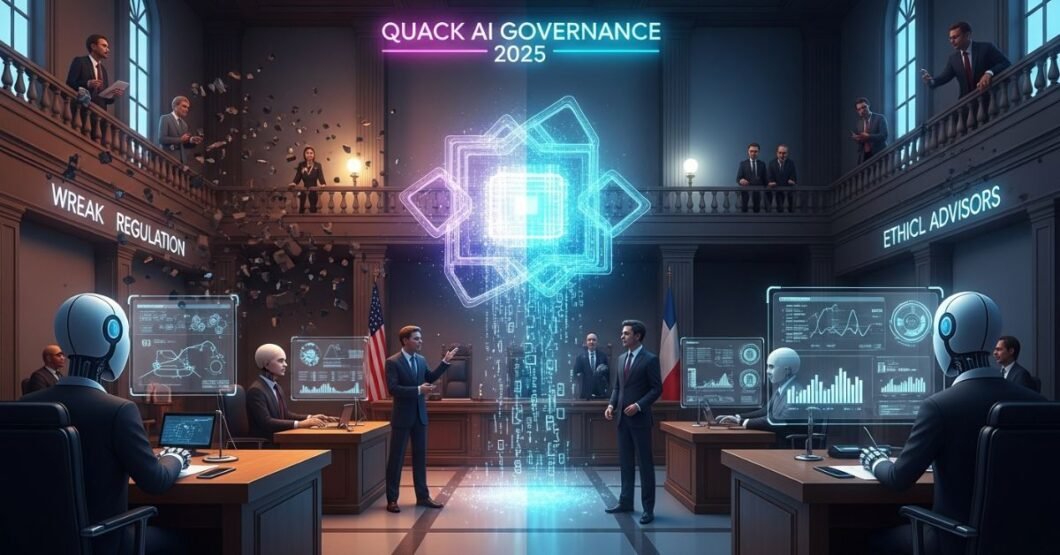
As artificial intelligence systems become integrated into every aspect of modern life from healthcare and finance to education and policymaking the question is no longer whether AI should be governed, but how. In 2025, overseeing machine intelligence has become a matter of national security, digital ethics, and individual rights. Misguided or misleading governance models what some critics now call “quack AI governance” threaten not only innovation but also public trust.
“Quack” AI governance refers to poorly designed or superficial frameworks for managing AI that offer the appearance of oversight but lack depth, transparency, or accountability. In this article, we’ll unpack what makes AI governance effective, how emerging global policies are addressing the challenge, and why tech leaders and governments must take integrity seriously in how they regulate intelligent systems.
What Is AI Governance, and Why Is It Critical in 2025?
AI governance is the system of rules, protocols, and oversight mechanisms that determine how AI systems are designed, deployed, monitored, and maintained. In 2025, its importance will reach a new peak.
Why It Matters:
- AI is used in employment screening, medical diagnostics, and criminal justice.
- Algorithms increasingly make autonomous decisions with real-world impact.
- Users often don’t know how or why AI made a decision, a phenomenon known as the black box problem.
Efforts to govern AI focus on:
- Transparency
- Accountability
- Equity and fairness
- Human oversight
Without sound policies in place, abuses can erode privacy, freedoms, and trust in technology.
Warning Signs of Ineffective AI Governance Policies
Not all governance frameworks are created equal. Some are created for optics, not accountability.
| Indicator | Meaning |
| Vague compliance rules | No clear guidance on ethical boundaries |
| Lack of third-party audits | Systems remain unchecked internally |
| Overreliance on self-regulation | Platforms responsible for their own oversight |
| Involuntary data consent | Users have no meaningful control over their information |
These signs of unchecked control often define what experts now term “quack AI governance” oversight that looks good in theory but fails in practice.
Global AI Governance Models in 2025: A Quick Landscape
By 2025, over 40 countries have published formal AI strategies. But there is no global standard, which means governance varies widely by region.
Notable Models:
| Region | Governance Framework | Strengths | Weaknesses |
| European Union | AI Act | Human rights focus, risk-based | Enforcement still developing |
| United States | AI Bill of Rights (draft 2025) | Equity & algorithmic audits | Non-binding recommendations |
| China | AI Ethics Guidelines | Central control, monitoring | Privacy and expression limits |
A global framework is still in progress, spearheaded by the OECD and UNESCO AI Ethics Recommendations, but adoption and enforcement remain inconsistent.
The Importance of Ethical Language Models
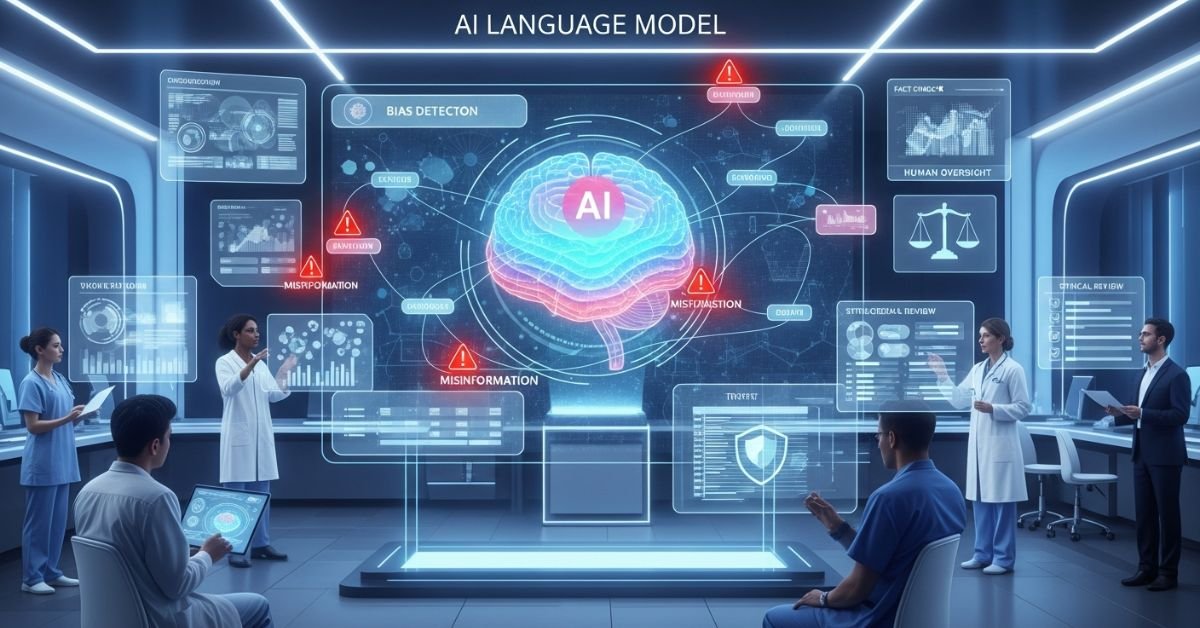
One of today’s most widely used AI technologies is the language model generative AI systems that automate writing, support customer service, and generate software code. These models require strong ethical oversight.
Key Concerns:
- Bias Amplification: Improper training data can reinforce stereotypes.
- Hallucinations: Factual errors can have high-stakes consequences.
- Accessibility Risks: Use in legal, hiring, or medical fields without safeguards
Any model operating at such a scale must be governed transparently, with human oversight and factual verification systems embedded.
Quack AI Governance vs. Responsible AI Development
Let’s break down the contrast in governance quality that elevates responsibility over reputation.
| Element | Quack AI Governance | Responsible AI Development |
| Transparency | Low | High |
| Human-in-the-loop Processes | Often absent | Embedded in every stage |
| Ethical Review Boards | Superficial or token | Independent and rigorous |
| Bias Auditing | Rare or ignored | Continuous, documented |
| User Consent and Rights | Ambiguous or coerced | Proactive, accessible |
Responsible AI governance builds systems for long-term safety not short-term gains.
Corporate Governance and AI: Who’s Accountable?
In large-scale private sector AI development, questions of accountability become blurry. Is it the developer? The company? The API provider?
Recent regulatory proposals aim to:
- Assign product liability to companies that use AI tools commercially.
- Mandate public ethics certifications for AI-enabled platforms.
- Enforce third-party audits of training datasets and outputs.
But enforcement mechanisms are often lacking. And when tech giants set their own rules, it opens the door for insufficiently governed systems, another hallmark of quack AI governance practices.
Open Source AI: Innovation or a Governance Risk?
Open-source AI tools accelerate development and democratize access. But they also raise governance complexity.
Benefits:
- Researchers and small firms can contribute meaningfully to AI progress.
- Transparency improves due to open-access codebases.
Risks:
- Misinformation tools become widely available.
- Security vulnerabilities can be exploited.
- No unified structure for moderation and accountability.
In the absence of policy, open-source tools could become safe havens for opaque use cases.
AI in Government and Public Use: Setting the Standard
Governments use AI to:
- Process tax filings
- Predict crime
- Allocate public welfare
This makes ethical public sector use essential when the state runs algorithms on citizens, there must be clear protections in place.
2025 Trends in Governmental AI:
- Explainable AI (XAI): Visual interfaces show how decisions are made.
- Algorithmic Transparency Logs: Required disclosures about models used
- Bias Mitigation Strategies: Public datasets updated for fairness
Failure in these areas not only damages credibility it leads to irreversible harm.
The Role of Industry Ethics Boards and Watchdogs
Independent AI ethics boards and third-party watchdogs are vital for unbiased evaluation.
Functions include:
- Reviewing AI products before public launch
- Publishing annual transparency reports
- Investigating whistleblower claims and ethical violations
Examples:
- AI Now Institute (NYU)
- Partnership on AI
- Algorithmic Justice League
But boards must be given enforcement power not reduced to PR roles to be effective.
Looking Forward: International AI Treaty and Beyond
A growing movement led by technologists, human rights organizations, and policy leaders is advocating for an International AI Safety Treaty.
Proposed Treaty Elements:
- Mandatory bias audits
- Global risk classification of AI models
- Accountability and appeals systems
- Shared AI ethics benchmarks
An AI governance model that works across borders would raise the floor globally while protecting freedom and human dignity.
Data Table: Top AI Governance Failures (2020–2025)
| Company/Agency | AI Tool Used | Issue Identified | Outcome |
| HRTech Inc. | Resume sorter AI | Gender discrimination | Algorithm pulled, lawsuit filed |
| Local Law Agency | Predictive policing tool | Racial bias | Public apology, data validation |
| HealthCorp | Diagnostic assistance model | Misdiagnosis | Recalled from public deployment |
Source: Center for Ethical AI Report, 2025
FAQs
What does “quack AI governance” mean?
It refers to weak or misleading governance practices that give the illusion of AI oversight without real protections or transparency.
Why is AI governance important in 2025?
Because AI decisions now directly affect health, legal, and financial outcomes globally.
Who regulates AI in the U.S.?
Currently, it’s split between agencies like the FTC, NIST, and emerging frameworks like the AI Bill of Rights.
Can open-source AI be dangerous?
Yes, it can be misused without ethical constraints or moderation.
What’s the risk of biased AI tools?
They can reinforce systemic injustices, automate discrimination, and erode trust in technology.
Conclusion
AI is not neutral; it reflects the values of those who build and regulate it. In the rush to innovate, many institutions risk falling into the trap of quack AI governance: initiatives that appear responsible but lack depth, enforcement, or ethics.
The future of AI doesn’t just rest on smarter algorithms, it rests on the policies that guide them. If we want AI that enhances society, safeguards must be more than statements. They must be systems verified and enforced by people who truly understand both technology and humanity.